


Managing titration for medications like Mounjaro and Wegovy is a clinical balancing act. You have to increase the dose enough to maintain weight loss momentum, but slowly enough to manage gastrointestinal side effects.
When you are managing a large estate or a high-volume independent clinic, "hope" is not a safety strategy. You need a platform that hard-codes safety into every step of the titration journey.
1. Professional Clinical Oversight: Real-World Side Effect Logging
One of the biggest risks in scaling a weight loss service is "blind titration"—increasing a dose without a clear understanding of how the patient handled the previous four weeks.
With Deltera, the pharmacist remains the clinical lead. During each titration review, you log patient-reported side effects directly into the digital consultation record.
- The Clinical Edge: This creates a longitudinal safety record. If a patient reports persistent GI issues, the pharmacist has the objective data at their fingertips to decide whether to "hold" the current dose or adjust the plan, rather than blindly following a generic step-up schedule.
- Audit-Ready: Every report is time-stamped and linked to the specific dose, providing a robust governance trail for clinical reviews.
2. Proactive Stock Planning
Stock shortages have plagued the GLP-1 market for years. Managing a clinic at scale means you cannot afford to have 50 patients ready for their 5.0mg titration step with no pens in the fridge.
While Deltera doesn't order the stock for you, it provides the Visibility you need to plan. By looking at your upcoming appointments and current patient titration stages, you can accurately forecast demand. This ensures you have the right dose for the right patient at the right time—protecting your revenue and the patient's clinical progress.
3. Proving Value: BMI Tracking Over Time
In 2026, the GPhC is increasingly focused on the outcomes of private services. Simply proving you sold a pen is no longer enough; you must prove the service is clinically effective.
Deltera automatically tracks and graphs BMI over time.
- For the Patient: Seeing a visual trend of their progress in the portal increases engagement and retention.
- For the Pharmacy: You have a ready-made audit trail of clinical success. Whether for an internal review or a formal inspection, you can instantly demonstrate the average weight loss percentage across your entire patient cohort.
4. The "Fallout" Protection: The IP Bridge
Titration isn't always linear. Some patients may need to stay on a lower dose for longer, or they may have co-morbidities that make the standard PGD "pathway" inappropriate.
In these cases, most pharmacies lose the patient to their GP. With Deltera, you use the IP Bridge. If a patient falls out of the PGD criteria but still requires treatment, an Independent Prescriber can pick up the case within the same platform. You maintain the clinical safety net and the patient relationship in one seamless move.
From "Pen Seller" to Clinical Lead
Weight Management 2.0 is about professionalising the experience. By using Deltera to handle the side-effect monitoring, BMI tracking, and titration forecasting, you move from being a "distributor" to a "clinical leader" in your community.
Ready to Scale Your Clinic Safely?
Don't let admin bottlenecks limit your growth. See how Deltera’s titration tools can transform your weight management service.
More posts





Discover the Deltera Platform
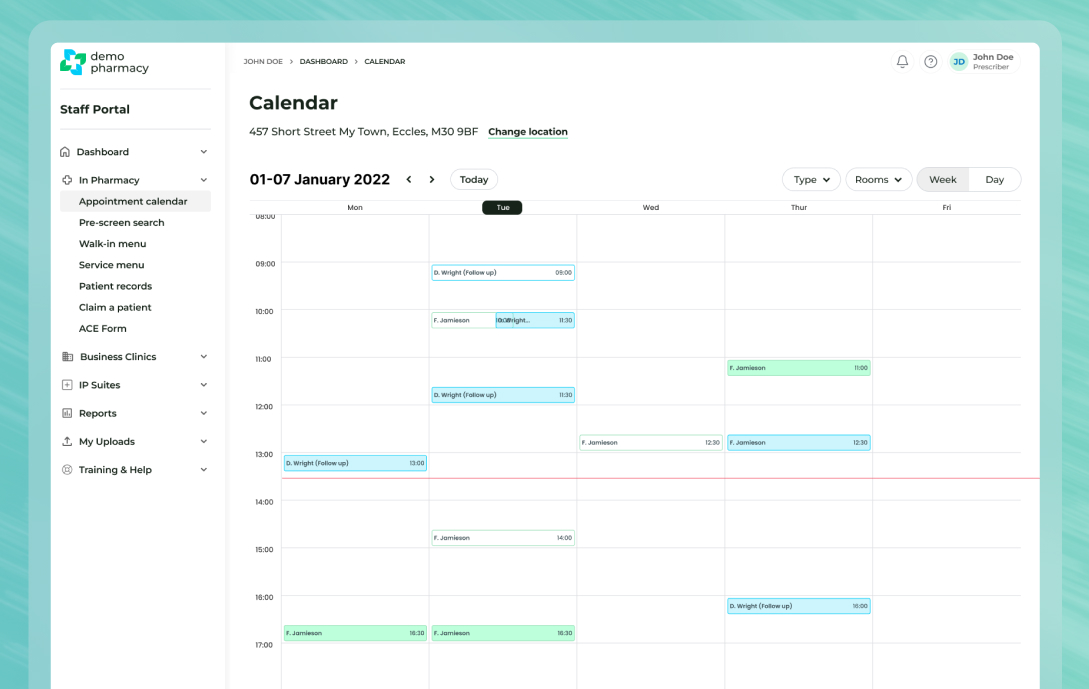
The Deltera Platform digitalises your private pharmacy services, providing the complete pharmacy software package to offer a full range of Patient Group Directions (PGDs). Gain the oversight and efficiency you need to thrive.

Ready to transform your pharmacy's clinical service?
Join the thousands of UK pharmacies using Deltera to grow their revenue and improve patient care.