
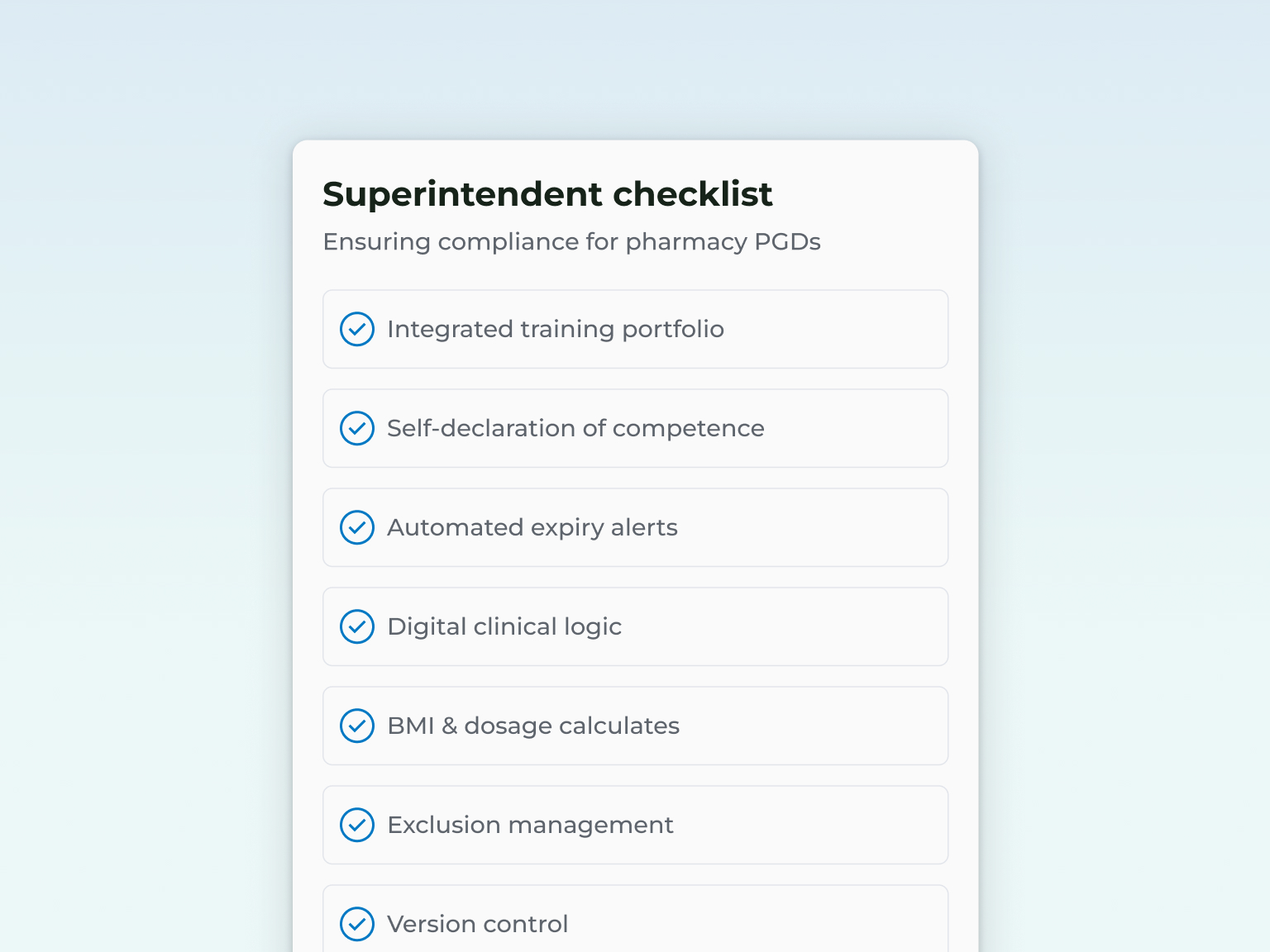

1. Clinical Competency & Training Validation
Compliance starts before the first patient walks in. You must prove that every pharmacist is not only "qualified" but currently competent.
- Integrated Training Portfolio: Do you have a single source of truth for all training certificates (Anaphylaxis, BLS, Injection Technique)?
- Self-Declaration of Competence: Is there a recorded, time-stamped declaration for every specific PGD in your library?
- Automated Expiry Alerts: Does your system alert you 30 days before a pharmacist’s training expires to prevent a lapse in service?
2. Clinical Decision Support (The Guardrails)
A PGD is a legal framework, not a suggestion. Your system must prevent pharmacists from accidentally "stepping outside" the protocol.
- Digital Clinical Logic: Does your software use "hard stops" that prevent the supply of medication if a patient hits a red-flag contraindication?
- BMI & Dosage Calculators: Are calculations for weight-loss or automated dosing suggestions to remove the risk of human error?
- Exclusion Management: If a patient is excluded, is there a clear, recorded pathway for referral to another service provider or an IP Bridge transition to ensure continuity of care?
3. The Immutable Audit Trail
In an inspection, "if it wasn't recorded, it didn't happen." Paper records are easily lost, incomplete, or illegible.
- Version Control: Can you prove which version of a PGD was in use on a specific date six months ago and how this is linked to the consultation?
- Real-Time GP Notifications: Are GP letters generated and sent automatically? Manual notifications are the #1 cause of "Minor Non-Compliance" findings.
- Digital Signatures: Are your PGDs signed digitally with a clear time-and-date stamp for both the authoriser and the healthcare professional?
4. Outcome Monitoring & Governance
The 2026 GPhC Inspection Framework looks for outcomes. You need to be able to "show and tell" how your services are performing across multiple sites.
- Centralised Oversight: Can you see, from a single dashboard, how many PGD consultations were performed, and report on their outcomes, across your entire group today?
- Adverse Incident Reporting: Is there a built-in mechanism for pharmacists to flag and record complications or side effects?
- Patient Feedback Loops: Are you capturing patient outcomes to prove the clinical value of your private services?
Why Paper PGDs are a Regulatory Liability in 2026
The days of a "signed folder under the counter" are over. Under the revised GPhC Inspection Framework (January 2026), inspectors are looking for evidence that governance is embedded in the daily workflow.
Paper PGDs can fail because they are static. They don't update automatically when a drug alert is issued, they don't prevent a tired pharmacist from missing a contraindication, and they make cross-site auditing impossible. Digital-first governance isn't a luxury; it’s your best defence against fitness-to-practice risks.
Ready to Modernise Your Clinical Governance?
Stop worrying about your next inspection and start scaling your clinical services with total confidence. Deltera was built by pharmacists to solve the very compliance headaches that keep Superintendents awake at night.
More posts




Discover the Deltera Platform
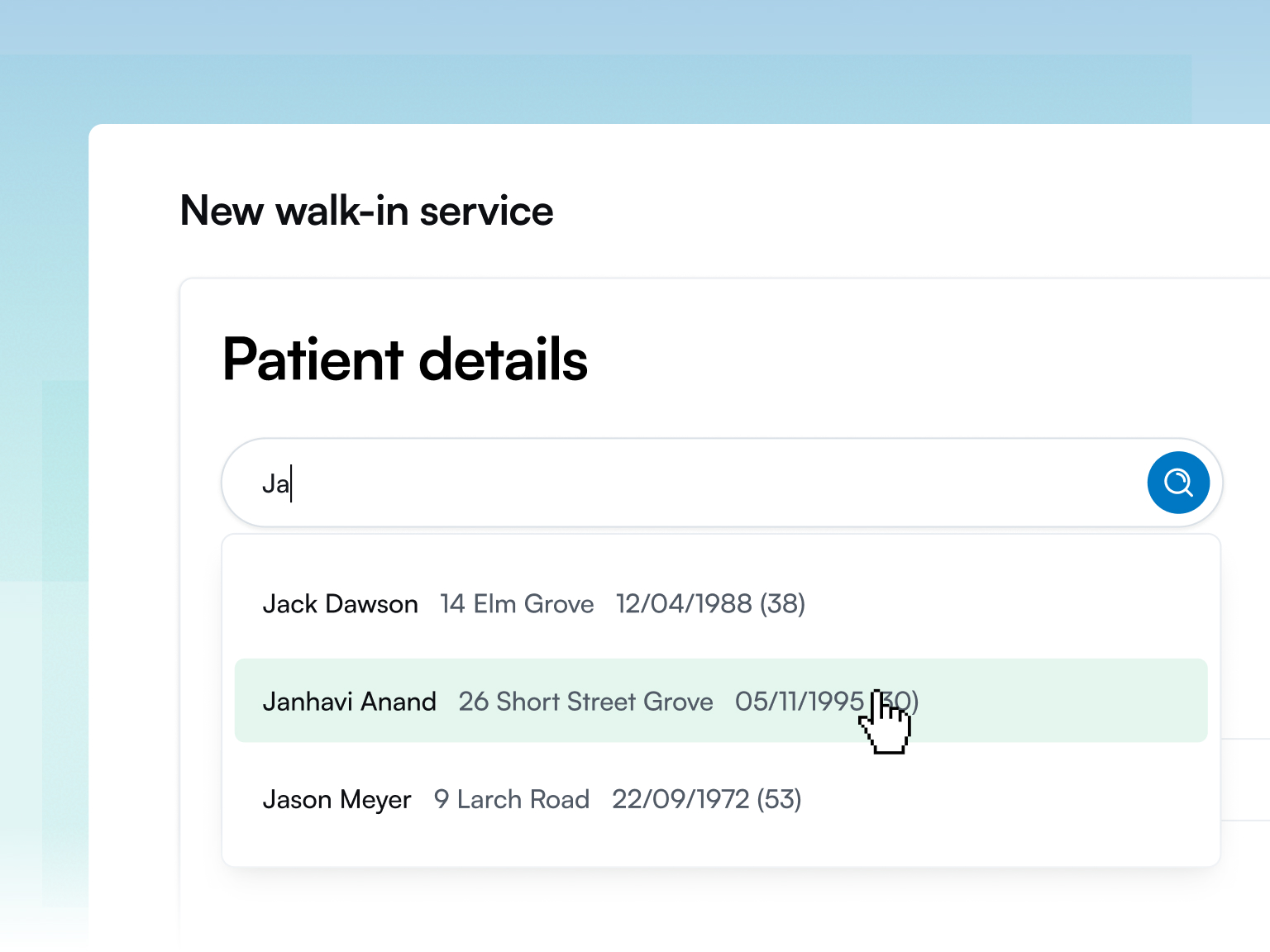
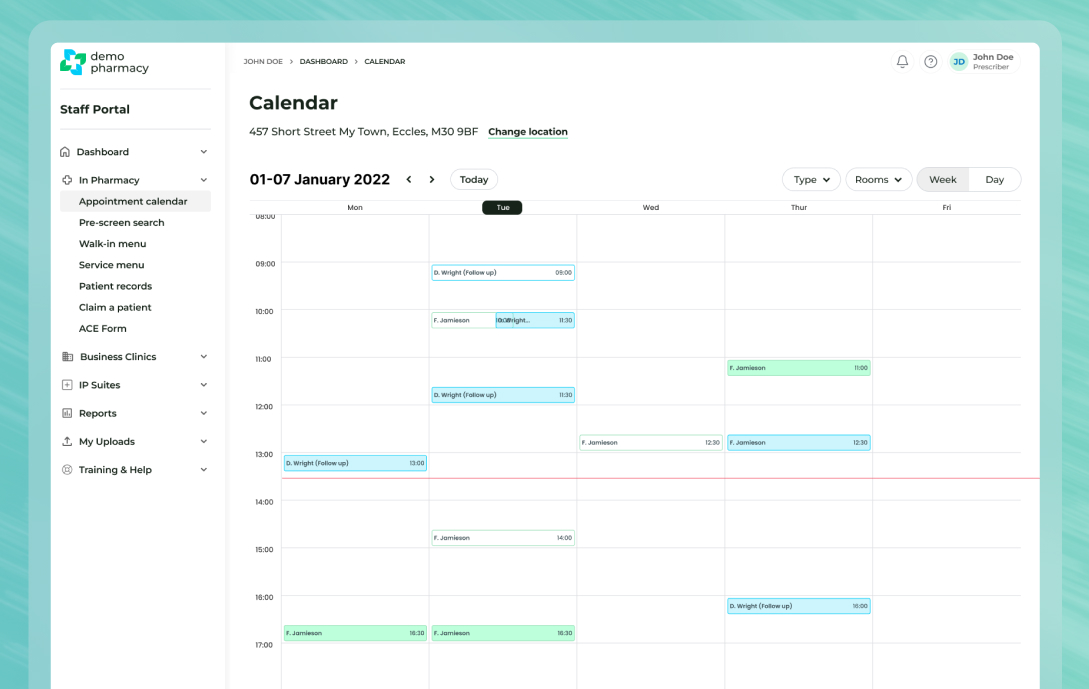
The Deltera Platform digitalises your private pharmacy services, providing the complete pharmacy software package to offer a full range of Patient Group Directions (PGDs). Gain the oversight and efficiency you need to thrive.

Ready to transform your pharmacy's clinical service?
Join the thousands of UK pharmacies using Deltera to grow their revenue and improve patient care.